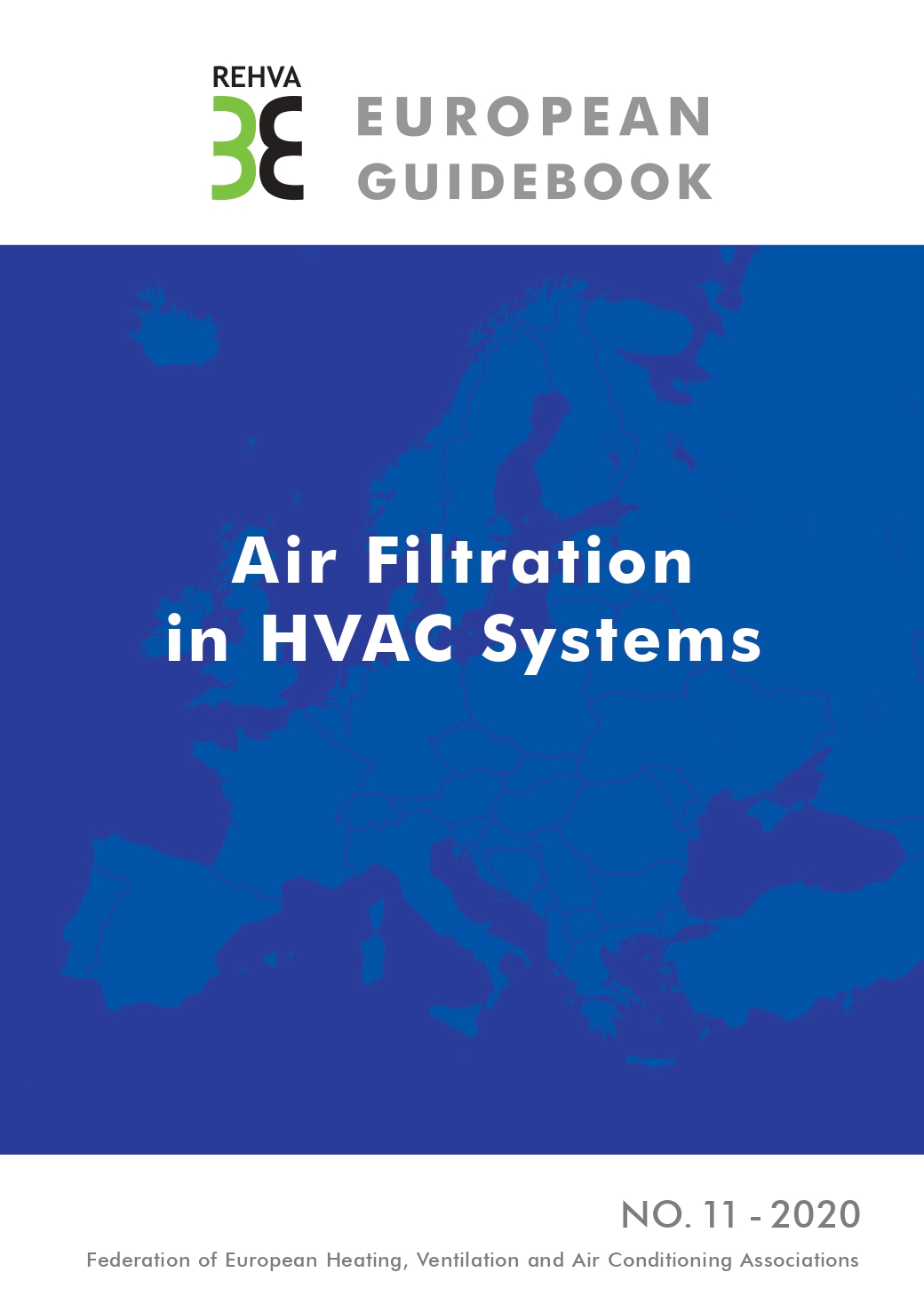
Guidebook No. 11
Authors: Riccardo Romanò, Romano Alberto Basso, Alain Ginestet, Jan Andersson, Jan Gustavsson, Marko Hyttinen, Paolo Tronville, Christian Rossi
The requirement for air purity has increased by virtue of the heightened awareness of indoor air quality. Air filtration has the potential to reduce the transport of outdoor pollutants to the indoor air and to improve the health and comfort of occupants. The scope of this Air Filtration Guidebook is to increase the awareness of the role of air filtration in improving indoor air quality. It will help designers and users to understand the background and criteria for air filtration, how to select air filters and avoid problems associated with hygiene and other considerations in the operation of air filters. The Guidebook is mainly applicable to air filters in general ventilation systems. However, parts of it may also be applied to any kind of forced ventilation or when air filters are used as a part of a ventilation system in critical applications to protect people, products or the environment. This Guide combines several points of view on air filtration; the authors include filter manufacturers, academics, laboratory experts, salespeople and, with this variety, it has sometimes been challenging to identify a common voice.
The writing of the Guidebook finished a few weeks before the outbreak of the COVID-19 pandemic and a chapter about this topic is missing. Nevertheless, most of the information contained in the Guidebook are applicable also to COVID-19 risk treatment once the dimension of infected particles to be captured and the allowed risk level are defined. Even though HEPA filters can practically capture all infected particles, are not applicable for the most of the existing air-conditioning systems.